Social marketing vs social media marketing


Is social marketing just marketing using social media?

No.

 Social networking tools and technologies are increasingly popular ways to reach an audience and spread a message, but it's important to distinguish this 'social media marketing' from social marketing. 

Social marketing is an approach used to develop activities aimed at changing or maintaining people’s behaviour for the benefit of individuals and society as a whole. It is a recognised discipline now found in academic courses, textbooks and several dedicated, peer-reviewed journals, with a regular programme of international conferences. 

Social media may be part of the toolkit for engaging with certain audiences, but the distinction is very important. For those of us working in social marketing this presents serious issues around integrity, authority, and possibly even ethics, which need to be addressed.

How does social marketing fit with behavioural economics?

In recent years a number of books, including Nudge, Freakonomics, The Tipping Point, The Spirit Level etc., have been picked up by policy makers and political parties. These are seen as offering new thinking and approaches to behaviour change and health inequalities and as possibly offering answers to some of the challenges facing society.

These offer a view of society through the lens of behavioural economics, which attempts to address the shortcomings of traditional, or neoclassical economics, with more of an emphasis on insight and a psychological view of the often irrational behaviour of individuals and groups.

Difference between social marketing and commercial marketing


Difference between social marketing and commercial marketing

 Social Marketing      
Commercial Marketing 

Meets the needs of the priority   population

Creates a need for the priority population
Society and consumer profit   
Marketer profits more than consumer
Organizations with similar goals cooperate 
Businesses with similar goals compete
Campaigns take longer to change behavior    Shorter time needed to sell a product
Comsumer involvement and commitment needed

Shorter term commitment and involvement


Social marketing research is usually more thorough than commercial research because facilitating enduring individual and social behavior change is complex. 


Why rely on a social marketing approach?

  • impacts a significant portion of the priority population
  • facilitates active behavior change over a period of time
  • stimulates change with limited resources
  • develops creative ideas
  • community partnerships become assets that compensate for limited funds
  • elevates the voice of the priority population and increases
  •  community identification 
  • influences policy and promotes positive social change 

The approach works within limits!

Social marketing is not always a success. If the attitudes and behavior changes you are encouraging are still not perceived as beneficial, acceptable and attainable by the priority population, it may not be worthwhile to develop a social marketing campaign at this time. In this situation, it is better to introduce a behavior change recommendation by developing connections with community and agreeing on a unified goal before planning a social marketing campaign.


Social marketing approach

what is social marketing Social marketing is an approach used to develop activities aimed at changing or maintaining people’s behavior for the benefit of individuals and society as a whole. 

Combining ideas from commercial marketing and the social sciences, social marketing is a proven tool for influencing behavior in a sustainable and cost-effective way.

It helps you to decide:

  • Which people to work with
  • What behavior to influence
  • How to go about it
  • How to measure it

  • Social marketing is a systematic and planned process. It follows six steps

    Six stages: Getting started, scope, develop, implement, evaluate, follow-up

A social marketing approach

Even if you don’t take social marketing any further, just considering these four questions will add value to your projects and policies.

  1. Do I really understand my target audience and see things from their perspective? 
  2. Am I clear about what I would like my target audience to do? 
  3. For my target audience, do the benefits of doing what I would like them to do outweigh the costs or barriers to doing it? 
  4. Am I using a combination of activities in order to encourage people to achieve the desired action? 

How social marketing helps 

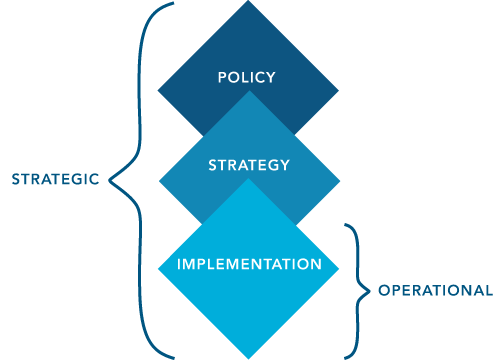
Strategic: policy, strategy, implementation - operational